

18 June 2026
When people talk about Verschoor today, they’re talking about cranes, wind energy projects, trade, and specialized work in city centers. But the foundation for all of this was laid decades ago. It all started with Maarten Verschoor Sr., first with a BP gas station on Warmonderdam and eventually on Hoofdstraat in Sassenheim. That’s where the company, as many people know it today, slowly took shape.
Started as a towing company

An accident near the gas station changed a lot. After a collision in which people were trapped and emergency services took too long to arrive, Maarten Verschoor Sr. decided to take matters into his own hands. He built his own tow truck in fourteen nights. After that, he was on call day and night. “He slept with a pager next to his bed and was often there before the emergency services.”
That mindset characterized Verschoor’s early years. Always available. Always pushing forward. Working twenty hours a day for twelve years. Helping people wherever possible. Those kinds of choices may not have brought in money right away, but they did bring something else: trust and loyalty. And that is exactly what keeps coming up throughout Verschoor’s story. “Loyalty always pays off.” “Originally, many crane companies started out as hoisting companies.”
The Beginnings of the Fleet
The towing business increasingly raised the question of whether they could handle larger and heavier loads. That’s how the first cranes came into use. First, small machines; then 18-metric-ton and 30-metric-ton models; and eventually, ever-larger equipment. Verschoor’s first crane was deployed at the sugar factory in Halfweg—a job that was supposed to take one day but ended up taking a year and a half.
Then Senior thought, “We need one more.” That spirit of entrepreneurship has always been a part of the company: spotting opportunities, acting quickly, and, above all, taking risks.
That was also the case when Verschoor moved to its current location in Sassenheim-Zuid: it was the first company on the industrial park, at a time when there was a lot of construction and expansion going on.
Loyalty within the company
“32 percent of the staff have been working here for more than 12.5 years, and 13 percent of them have been here for more than 25 years. Currently, six fathers are working here alongside their sons.” According to the family, all of this speaks to the company’s culture. People are given responsibility, have opportunities to grow, and often remain with Verschoor for many years. The next generation also started at the bottom. Maarten Verschoor Jr. climbed into the crane himself at a young age. “First, you had to show what you were capable of.”
Starting as a machine operator, he continued to advance within the organization—from planning to sales and later to trading. That combination of technical expertise, business acumen, and a trading mindset proved crucial to the company’s continued growth. And that’s evident in the way everyone is ready to support Verschoor. “We do have a certain goodwill factor—in negotiating, explaining, and ultimately executing.”
Verschoor Continues to Grow
That entrepreneurial spirit also led to major breakthroughs. Take, for example, the arrival of the first Spierings cranes. “At first, Senior wasn’t on board,” but when Senior walked away, Junior took a risk and said, “Go ahead and order four.” This is typical of Junior’s innovative approach.
UCM Holland also grew out of practical experience. It started by selling parts from a fire-damaged crane, and later expanded into the international trade in used cranes and parts. “It grew naturally through word of mouth.”
During those years, Maarten Jr. traveled all over Europe to inspect cranes, visit customers, and conduct business. Sometimes he’d be on the road for days, with stacks of faxes, photos sent by mail, and long drives through Eastern Europe. “Back then, you spent the whole day sending faxes. That’s how business used to be.” After the fall of the Berlin Wall, demand skyrocketed. Eastern Europe needed machinery for reconstruction and infrastructure. “In our peak year, 2004, we sold 137 cranes.”
Stand Out with Unique Faucets
The focus shifted increasingly toward specialized work in inner-city areas. “You can’t just set up a crane in the city.” That’s why the company invested in a department staffed with permit specialists, compact machines, and cleaner equipment. Verschoor now processes more than a thousand permits annually for lifting operations in cities and towns.
In addition, the company is fully committed to electric and lightweight equipment. “We buy machines that others don’t have.” One example of this is the aluminum aerial work platform cranes, which are ideal for sensitive inner-city locations such as Amsterdam’s quays.
In 2014, Verschoor entered the wind turbine crane business. “We just decided to give it a try. We now own six wind turbine cranes, are building the largest wind farms in Europe, and have built the largest wind farm in the Netherlands.”


Loyalty in Customer Relationships
Trust remains essential in international trade as well. To date, cranes and parts have been sold to more than 140 countries. “If things go well the first time, a relationship is formed.” They build these relationships not only through speed or price, but above all through service, honesty, and proactive problem-solving. At the same time, the world is changing rapidly. Energy crises, wars, stricter regulations, and complex international trade call for new decisions. “You have to be able to weather bigger storms than before.”
Nevertheless, the focus remains on the future. UCM is working on further digitization and online parts sales. In addition, Verschoor is investing heavily in electric cranes for the Dutch market.
“We want to ensure that electric construction equipment really gains momentum.”
Despite all the growth and developments, our core values remain the same: trust, craftsmanship, and helping one another.

“Loyalty always pays off”

60 years of blood, sweat, and cranes

Save the date: June 27&28 open days at Verschoor

The latest LR11000 is named after Maarten Junior

Fleet expansion: new LR1800 with X3 boom system
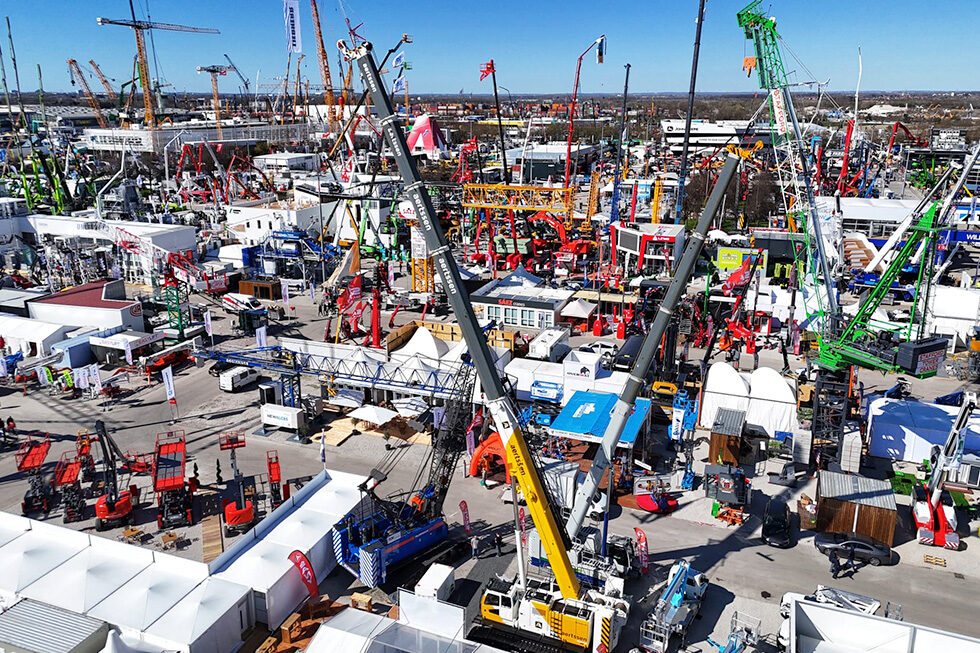
Bauma 2025: A successful week!

Hoisting works of art, an art in itself!

New acquisition: 100 ton/meter truck-mounted crane

The way up as a crane operator

World first for Verschoor: the LG 1800-X3

Two new powerhouses for Verschoor

BIG NEWS at Verschoor Cranes!
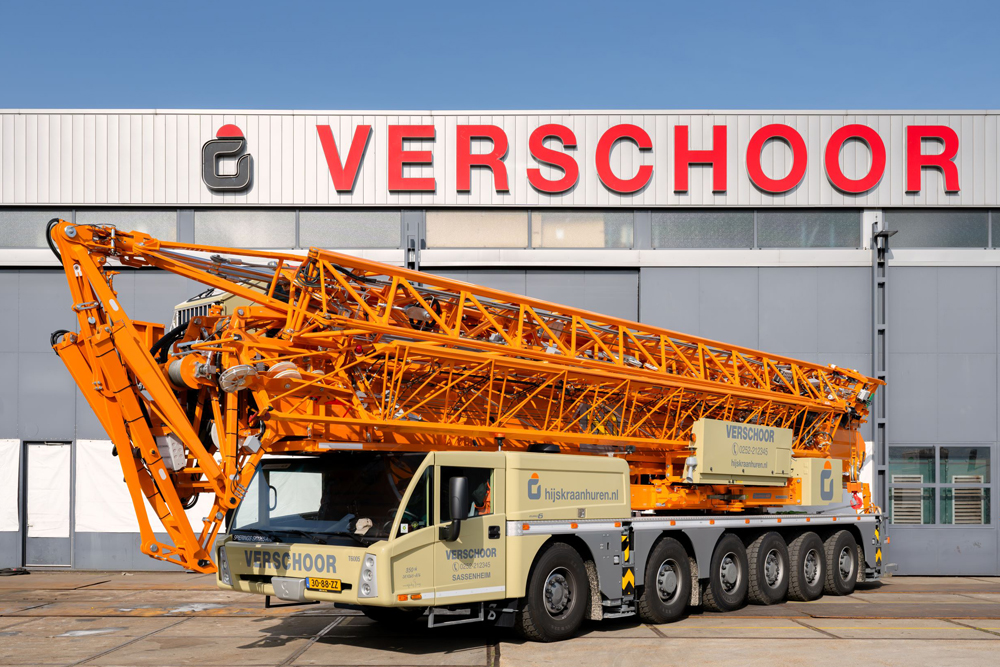
350th Spierings SK1265-AT6 goes to Verschoor

New LTM1150-5.3 put into service

Team Verschoor receives Safety Award
